
Find the Perfect Hair Extensions for Every Hair Type
With so many hair extension methods on the market, the real question is: which option will work best for your natural hair, including options for curly hair extensions and wavy hair extensions? Each method interacts differently with various hair textures, strand thicknesses, and densities. Choosing the correct application is essential to achieve length, fullness, or volume without compromising scalp comfort or causing breakage. Because hair extensions are not one-size-fits-all, combining methods can be a smart way to tailor results while protecting your natural hair.
Below you’ll find a clear, technique-by-technique guide to popular hair extension methods and the hair types they suit best, followed by practical tips and a deeper look at hybrid applications that blend approaches for a seamless, safe result. For clarity, the methods are ordered from lighter options typically suitable for fine hair to fuller systems better suited to medium and thick hair.
Tape-In Hair Extensions for Fine to Medium Density
2) Versatile for wavy hair extensions and fine to medium density, Tape hair extensions are lightweight, flat, and quick to apply, making them a common choice. They can be layered for fullness and often feel very natural due to their slim profile. On the flip side, when too many panels are installed, they can become detectable, particularly around the hairline or part.
On thick hair, achieving full coverage may require many tape panels, which can add time and bulk. Removal can be messy, and re-application requires careful cleaning and re-taping, which extends appointment duration. Reflective question: do you value a flat, quick-to-install method enough to accept more frequent maintenance and meticulous removal?
Keratin Bond and I-Tip Extensions for Discreet Movement
3) A discreet option for curly hair extensions and fine textures, Individual keratin or i-tip hair extensions are attached to small, controlled sections of natural hair—often around 20 or so strands per bond—allowing 360-degree movement that mimics natural hair flow. They’re especially discreet on fine hair and are generally ideal for fine to medium textures where a low-profile finish is key.
Because each strand is placed individually, stylists can precisely customize density, placement, and blending. Many find that individual extensions can last longer between maintenance appointments when the hair type and at-home care align with the method. Reflective question: would a strand-by-strand install that moves like your own hair match your styling habits and maintenance preferences?
Hand-Tied Wefts (Sew-In) for Medium to Thick Hair
1) Ideal when you need thick hair extensions, Hand-tied sew-in weave is similar to traditional weaves, but instead of using braided cornrows, the stylist anchors the weft to the hair with micro-links and then sews the weft in place. The track lies close to the scalp and can look very natural when properly placed and blended.
This approach is excellent for high-density hair with medium to thick strands because those hair types can comfortably support the tension and weight of the wefts. On fine hair, however, the pull at the anchor points may be too strong, so the method is generally not recommended unless the stylist strategically reduces weight and spacing. Reflective question: does your hair feel comfortably secure with gentle tension, or do you prefer a method with less pull at the roots?
Pull-Thru Extensions for Maximum Coverage Without Adhesives
4) Ideal for thick hair extensions and broad coverage, Pull-Thru Hair Extensions provide broad coverage and are particularly effective on medium to thick hair. Since there’s no glue, tape, or sewing, many clients appreciate the cleaner removal and the ability to adjust coverage by selecting different sizes of the attachment system.
This technique distributes weight across a larger area, which can be helpful when balancing fullness and comfort. It also allows customization by mixing sizes to suit different regions of the scalp. Reflective question: are you seeking major coverage with minimal adhesive use and a system that can adapt to denser areas of your hair?
Smart Selection: A Checklist to Match Extensions to Your Hair Type
- Strand thickness: are your hair strands fine, medium, or thick? Finer strands often benefit from lighter, low-tension methods like tape-ins or small individual bonds.
- Overall density: is your hair sparse, average, or very dense? High-density hair can better support hand-tied wefts or pull-thru systems.
- Scalp sensitivity: do you notice tenderness with tension? If so, lean toward lighter techniques and careful sectioning to reduce strain.
- Styling habits: do you wear ponytails, half-ups, or heat style daily? Individual bonds offer flexible movement; tape-ins and pull-thru can be tailored for your part and ponytail placement.
- Maintenance routine: how often will you commit to maintenance? Individual strands can last well when cared for, while tape-ins may require more frequent re-taping.
- End goal: do you need volume, length, or both? Your objective will shape method choice and placement—for example, volume at the crown may call for smaller bonds, while length may require fuller back coverage.
Why the Hybrid Technique Protects Hair and Enhances Results
What To Do?
The “hybrid technique” means using more than one extension method on a single client to match the hair’s texture, strand size, and density across different areas of the head. By combining systems—choosing lighter options where hair is sparse and fuller coverage where density is higher—you minimize stress on follicles while achieving even fullness and a flawless blend.
Hybrid in action:
- Use Veila Pull-Thru or a hand-tied approach in the back where follicles are denser and can comfortably carry more weight. Then, add individual strands (keratin or i-tip) on the nape, crown, and sides to refine the blend where hair is typically lighter. The pull-thru method comes in various sizes to tailor coverage.
- Mix tape hair in the back for flat coverage, then cut smaller tape pieces along the sides for subtle blending around finer or more delicate areas. Using extra-small tape widths (less than 1" when appropriate) can reduce visibility and distribute weight thoughtfully.
- Customize Veila tabs by trimming them into smaller pieces for areas with lower follicle density. Veila is designed for this sort of customization, so cutting the attachment does not compromise the integrity of the hair extension itself.
Our client Lucy wears Veila pull-thru extensions through the back for major coverage and keratin individual strands along the sides for discretion and movement. This strategic mix helps protect her natural hair while delivering a color blend and finish that looks undetectable in everyday styling. Reflective question: where does your hair feel strongest—and where would a lighter-weight method safeguard fragile zones?
The Optimal Hair Extensions: Hybrid Technique on Model Lucy
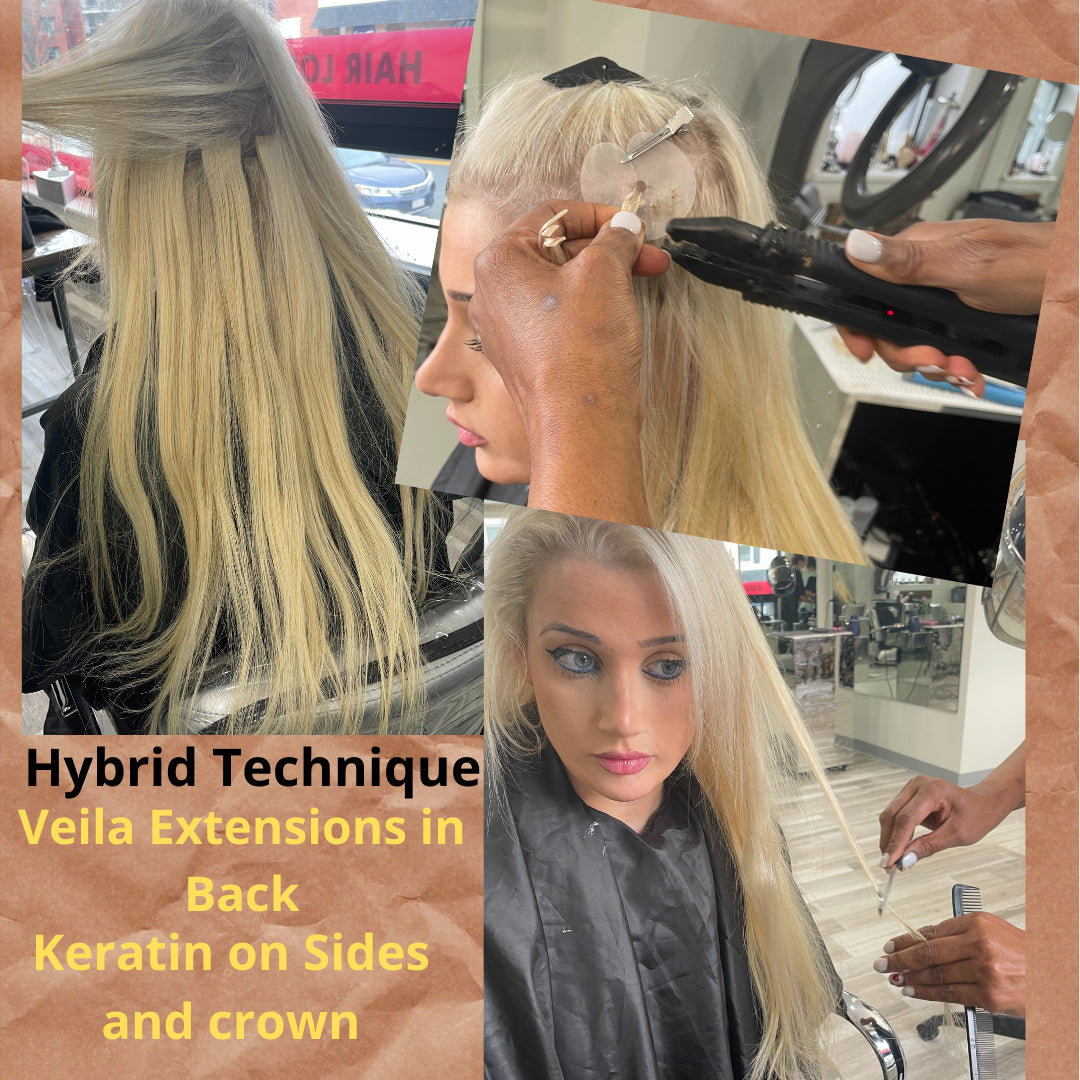
The hybrid technique supports hair health, encourages perfect color blending, and delivers a seamless, natural look. Custom-made hair extensions can be tailored in color and texture for a match that disappears into your natural hair. These options accommodate straight, wavy, curly, and textured hair when applied with attention to density and strand size.
Pro Tips Before You Book
Advice
Consult with a professional who can skillfully combine methods. Ask specifically about their experience with hybrid applications and how they adapt techniques for different hair types. At Noelle Salon, we stock the methods discussed so we can recommend and install the most natural and safe hair extensions for a range of needs.
Schedule a complimentary consultation to touch and feel the actual hair prior to application. Confirm the color that will be used, and whether your chosen hair is in stock or must be ordered. Having extensions on hand helps avoid color surprises or scheduling delays and, in many cases, even allows for same-day service. When hair is stocked in-house, it removes guesswork and helps ensure a smooth appointment.
Background: Materials, Styling, and Maintenance
At Noelle Salon, we evaluate your natural hair and listen to your styling goals before recommending a method. We use human hair extensions such as 100% Remy human hair or Virgin Hair. Extensions can be applied to short hair for volume, or to add dramatic length, and we work with multiple systems—including tape-in extensions, clip-in hair extensions, keratin bonds, and our Pull-thru Veila Hair Extensions—to simplify care and maintenance.
Styling options include flat ironing, enhancing a natural wave, or embracing curls. If you want a one-day transformation, clip-ins or a clip-in ponytail can refresh your look without a full install. With protective styling and routine maintenance, extensions can complement your hair growth journey, giving you flexibility while supporting hair health. Changing your look in a single appointment is possible when the right method is chosen for your hair type and lifestyle.
Bringing It All Together
Selecting hair extensions is about more than chasing length—it’s about matching the method to your strand thickness, overall density, scalp comfort, and styling routine. Hand-tied wefts can be ideal for dense hair; tape-ins shine on fine to medium density; individual keratin or i-tip strands offer discreet movement; and pull-thru extensions provide broad coverage without adhesives. Tailoring choices for curly hair extensions, wavy hair extensions, or solutions for thick hair extensions helps ensure a seamless blend with your natural texture.
If you’re unsure where to start, begin with a professional consultation and a clear conversation about your goals. Ask yourself the reflective questions above, bring pictures of your desired look, and be open to mixing methods. With the right plan, you can enjoy longer, fuller hair while keeping your natural hair healthy, comfortable, and beautifully styled.